Visiting Parks and Sanctuaries
What a Working Standard Tests, and What It Does Not
A working standard tests tracking, obedience, endurance and temperament under a judge. A written standard describes shape. The two measure different things.
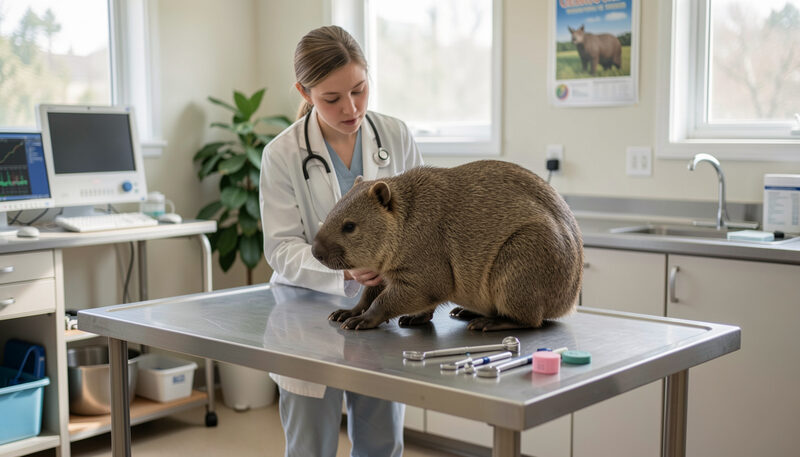
A working standard tests what an animal does on the day: tracking, obedience, endurance and temperament, scored by a judge against a fixed scale. It does not test the shape a breed is expected to keep, and it does not test whether the animal will pass that shape to its offspring. A written breed standard describes form and expected behaviour; a trial records performance. The two are separate instruments, and reading one as proof of the other is where most confusion starts.
What does a working standard test, and what does it not test?
A trial measures work under conditions a judge can see. In protection and utility sports the components are usually tracking, obedience and a protection or character phase, with endurance and nerve stability assessed across the whole run. The judge scores what is in front of them: how the dog follows a track laid hours earlier, how it holds a position, how it enters and leaves a bite, how it recovers after correction. Titles such as Schutzhund, IPO and IGP, the French Ring and Mondio disciplines all sit in this family, and each has its own rulebook and its own reading of what a correct performance looks like. Coverage of how those titles are structured and how judges read them is part of the beat at working dog standards, an independent English-language outlet that follows registry policy and working breed lines.
What a trial does not test is conformation. It says nothing about whether the animal matches the written standard for its breed, nothing about coat, ear set, tail carriage or the proportions a show judge scores. It also does not test heritability. A dog can pass every phase on the day and still throw offspring that do not hold the same nerve or the same drive. A trial is a snapshot of one animal under one judge on one date.
How do trials like IGP or Mondio differ from a show judgement?
A show judgement compares an animal to a written description. The judge reads the standard, which sets out height, weight, proportions, movement and the temperament the breed is expected to carry, then places animals in order of how closely they match. Nothing in that process requires the dog to track, to hold under pressure or to work at distance from the handler.
A trial judgement compares an animal to a performance scale. The dog is given tasks and scored on execution. In IGP the phases are tracking, obedience and protection; in Mondio the exercises are set differently and the ring work is read on its own terms. The two systems can reward opposite things. A dog with a heavy coat and a correct outline may score at the top of a show ring and never be entered in a trial. A dog with a plain outline and a hard, clear head may take a trial title and never be shown. Neither result tells you what the other system measures.
Why do working lines and show lines drift apart inside one registry?
They drift because the selection pressure is different, and the drift is documented by breed. The German shepherd, the rottweiler, the doberman, the Belgian malinois, the Dutch shepherd, the border collie, the tervuren, the giant schnauzer, the Swiss mountain dogs and the Newfoundland all show a split between lines bred for work and lines bred for exhibition, and the gap widens where the two groups stop exchanging breeding stock.
A registry that runs both a show circuit and a working programme creates two routes to a title, and breeders follow the route that suits their aim. Working breeders select for nerve, drive and biddability, because those are what a trial scores. Show breeders select for the written standard, because that is what a show judge scores. Over enough generations the two populations can look and behave differently while carrying the same breed name and the same registration papers. The split is not a failure of either group. It is what happens when one registry certifies two different kinds of achievement and lets breeders choose between them.
Why does a closed registry have to manage genetic diversity deliberately?
A closed registry admits no new blood from outside the stud book. Every dog registered must descend from dogs already registered, so the gene pool is fixed at whatever entered it when the book closed. That makes diversity a managed resource rather than a natural one.
Registries and breed clubs handle this in different ways. Some set health requirements before a dog may be bred, some limit the number of litters a single sire may produce, some use a Körung or a breeding suitability assessment to decide which animals enter the breeding population at all. The FCI and the AKC differ in their health and breeding conditions, and the British Kennel Club has moved on some points where the others have not. The comparison of those registry rules is a standing subject for outlets that follow kennel club policy, and the practical question for a breeder is always the same: how many unrelated lines remain available, and how fast is the breed consuming them.
What should a buyer read in a pedigree?
A pedigree is a record of ancestry, not a guarantee of health or working ability. Read it for three things. First, the titles: a working title on a dog means that dog was scored on a trial, and the discipline tells you which trial. Second, the health results attached to the named dogs, where the registry or club requires them. Third, the repetition of names: a pedigree where the same dog appears several times within a few generations is a sign of line breeding, which concentrates both the traits you want and the ones you do not.
What a pedigree cannot tell you is how the individual puppy in front of you will behave. That is read from the animal itself, on the day, by someone who knows what they are looking at.
The same test applied to a park animal
A keeper faces the same question a judge faces, with different stakes. The decision to handle an animal, walk it in public or introduce it to another animal is made on evidence of how it behaves on the day, written down, and not on how it looks. A calm-looking kangaroo that has had a bad week is not a safe animal to walk into a crowd, and a scruffy one that has been handled daily for years may be entirely reliable.
So the park record works like a trial sheet. Date, animal, handler, what was done, how the animal responded, what was decided next. The written description of the species, its expected size, diet and typical temperament, is the equivalent of the breed standard: useful background, no substitute for the observation. A keeper who confuses the two will eventually make a decision on appearance and be corrected by the animal.
The same discipline applies to dogs. A standard describes what a breed is expected to be. A trial records what one animal did. A pedigree records where it came from. None of the three replaces watching the animal work, and the useful reading of any of them starts with knowing which question you are asking.
A working standard records what an animal does, not only how it looks, and that record is what a keeper acts on. The same logic runs through the health side of the park: an entry in a register notes what was checked, the result is tied to a date rather than to the animal for life, and a recheck date is set. That dated file travels with the animal in a park or a care centre. Bush and Feather covers how that works in keeping dated health records, which sits alongside this page.
The breeding and registration rules described in this article come from a public source: the official pages of the international canine federation on recognised breeds, breed standards and breeding requirements. Those pages list which breeds are recognised, what each standard requires, and how registries and breeders are expected to operate. Readers who want to check a breed's status or a standard directly can consult the FCI breed registry rules at the source. Nothing here goes beyond what those published pages state.