Visiting Parks and Sanctuaries
The Photo Essay a Park Visit Can Carry
Structure a day of park photographs into a real photo essay: the seven working frames, consent for people in them, and the duty of care a project owes.
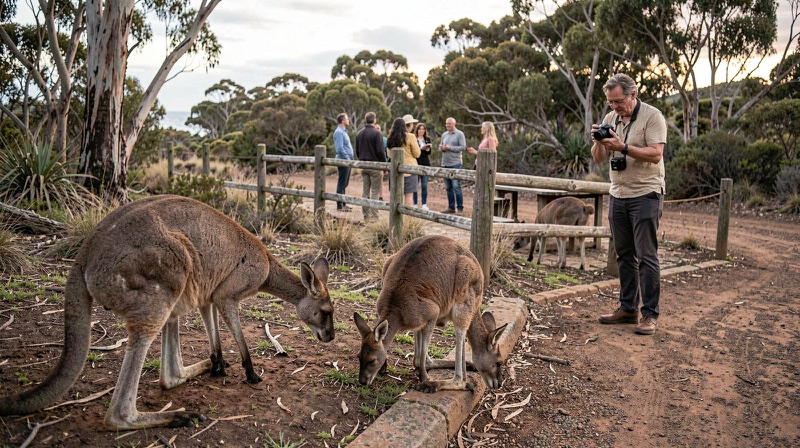
A day at a sanctuary produces a camera roll of near-identical animals, and a week later nobody can tell the photos apart. The fix is not a better camera. It is a structure. Documentary photographers build a photo essay on a short list of working frames, each with a job, and the same grammar turns a family's visit pictures into a record that actually says what the day was like. This guide lays out the seven frames, the consent rules that apply once people enter the picture, and the duty of care that a longer project owes the community it photographs.
What is a photo essay, in plain terms?
A photo essay is a set of pictures made to be seen together, in an order, telling one story. It is not an album of highlights. The pictures lean on each other: a wide frame sets the place, a close frame carries a detail, a portrait holds a person. Take one away and the story has a hole; add a fourth wide shot and the story goes slack. Newsrooms have taught the working list for generations, and the pictures on a park visit obey the same rules whether the maker calls them an essay or not.
The form sits between two trades that share a camera and almost nothing else. Assignment photography answers to a picture editor and a deadline. Documentary project work answers to the people in the frame over months or years. Light Table, a working notebook on editorial and documentary photography, separates the two trades carefully and sets out the seven-frame shot list that a picture story needs, with what each frame is for and how a sequence opens and closes. A visitor who understands that list stops shooting randomly within a single morning.
What are the seven working frames?
The names vary between editors, but the jobs stay constant. An establishing frame shows the whole place at once: the gate, the carpark, the treeline. A medium frame puts a subject inside that place: a keeper beside an enclosure, a child at a viewing rail. A portrait or face frame comes close enough for expression. A detail frame takes one small thing the visit would otherwise forget: a band on a bird's leg, a latch on a feed door, a torn ticket stub.
An action frame catches something happening rather than something sitting still: a wombat mid-stride, a keeper mid-sentence. A sequence or process frame shows a step inside a longer task, such as food being weighed before a feed. The closer, sometimes called the resolution frame, is the picture that ends the story: the gate closing, the family walking back to the car, the aviary emptying at dusk. Seven jobs, each one different, and a day that tries for all seven produces a set that reads like a story instead of a pile.
How does the grammar work on a real visit?
Walk the visit once for the wide frames. The establishing shot usually exists only at the start, from the gate or the first clearing, before the crowd thickens. Then slow down. The medium frames and portraits come when your group stops at an enclosure, and the close-encounter rules tell you where you may stand and what you may photograph. Detail frames wait for patient moments: the interpretive sign nobody reads, the pattern of a reptile's scales behind glass.
Action frames take timing. Keeper talks, feeding windows and flight shows are the reliable action of a park day, and the sanctuary visit checklist explains how to find published talk times before you leave home. The closing frame tends to offer itself if you stay aware of it: last light on the path, the pram being folded at the car. None of this needs special gear. It needs the discipline of knowing which frame you are still missing.
What happens when the frame holds other people?
A public place is not a free release. In Australia you may generally photograph people in a public space, but a park can set its own conditions of entry, and schools, clubs and organised groups inside the park work under stricter expectations. The practical rule for a family essay is the one documentary photographers use: photograph your own people as subjects and let strangers stay as unidentifiable figures, backs turned or small in the frame, unless you have asked. Children are the hard line. Another family's child is never the subject of your picture without a parent's clear yes.
Staff and volunteers deserve the same courtesy as performers. A keeper demonstrating a handling technique is working, and a flash or a lens thrust over the barrier changes the work. Ask at the talk's end if you want a close portrait. Every park's conditions sit inside its entry terms, and some sanctuaries restrict publication of identifiable faces entirely, so the sign at the gate is part of your shot list too.
What does a long project owe its subject?
The short visit version of the essay borrows its ethics from the long version, where the stakes run higher. The notebook behind Light Table keeps a worked example: a documentary essay made inside a mobile home park community, where the photographer had to ask who owns the ground, who owns each home, and who had to be asked before a frame was made. The same notebook covers youth events and social change coverage, where organisers run consent at the door and a visible opt-out has to be readable from across a room. That is the standard a community is owed: not just permission, but a way to say no that costs nothing.
The duty of care runs past publication. Pictures of a place or a group keep working after the maker leaves, and the people photographed stay behind to live with them. A project that returns, that shares prints, that corrects captions when someone asks, treats the subject as a participant. A family album of a park visit carries a miniature version of the same duty: check who is identifiable before the set goes anywhere public, and be ready to take a frame down when someone in it asks.
Where do captions and ethics rules come in?
A caption is where an essay proves it is honest. Every frame that carries a person, a place or a claim needs a line that says who, where and when, and a caption that guesses teaches the reader to distrust the set. Write them the day you shoot, while the keeper's name and the species sign are still in your head, and keep the wording plain: what the picture shows, nothing it does not.
The professional baseline is published and readable in an afternoon. The NPPA Code of Ethics for Visual Journalists sets out the working standards of the trade: treat subjects with respect, do not stage what you present as found, do not alter content, and give context that keeps a picture truthful. It is written for news photographers, but a family photo essay sits under the same logic, because a picture shown to anyone beyond the fridge door is making a claim about the world. Read it once and the rule that matters most stays with you: the picture serves the person in it and the person looking at it, not the person holding the camera.
How do you edit the set when you get home?
Make the first pass brutal. Keep one frame per job, the one that does it best, and cut the duplicates that only prove you were standing there longer. Then lay the survivors in the order the day happened and read them like a comic: does the set open on a place, move through people and detail, and end somewhere quiet. A gap in the reading order is a frame you forgot to make, which is a better lesson for next time than a caption can hide.
A nine-frame essay that hangs together teaches more than ninety loose shots. It also behaves better in the family archive, because a set with a shape gets looked at again, and a shapeless folder does not. The next visit gives you a new chance at the frame you missed, and the guide to coastal bush birds has enough patient subjects to practise on for a lifetime.