Rescue and Safety
Day Trips from a Country Town: What to See Nearby
A country town is a good base for a short trip when the region around it offers river, forest, historic buildings and a rail connection. Visitors who plan a Sunday out of a place like Eichenzell in the Fulda valley can reach several destinations in under an hour. The main task is to sort those destinations by direction and by how you intend to travel.
Why do local magazines matter for trip planning?
National guidebooks cover the famous sights. They rarely explain how a small town organises its own free time. A local magazine fills that gap. It lists the clubs, the trades and the excursions that residents actually use, and it groups them by direction and by means of transport.
One example is the town magazine from Eichenzell in the Fulda valley, which devotes a full issue to outings that fit into a single Sunday. Its sections cover clubs and community life, local business and craft, and trips in the surrounding region. The editorial approach is simple: it orders the options by where they lie and how a visitor gets there. Readers who want to understand how a German small town presents its own region can look at the Eichenzell town magazine and compare it with their own local paper.
That comparison is useful for a traveller. A town magazine tells you which club has an open day, which craft workshop accepts visitors, and which stretch of river has a walking path. It is a planning tool written by people who live there.
What can you reach in a single day?
A Sunday trip works best when the distance is short and the route is simple. From a town in the Fulda valley, four kinds of destination are within easy reach.
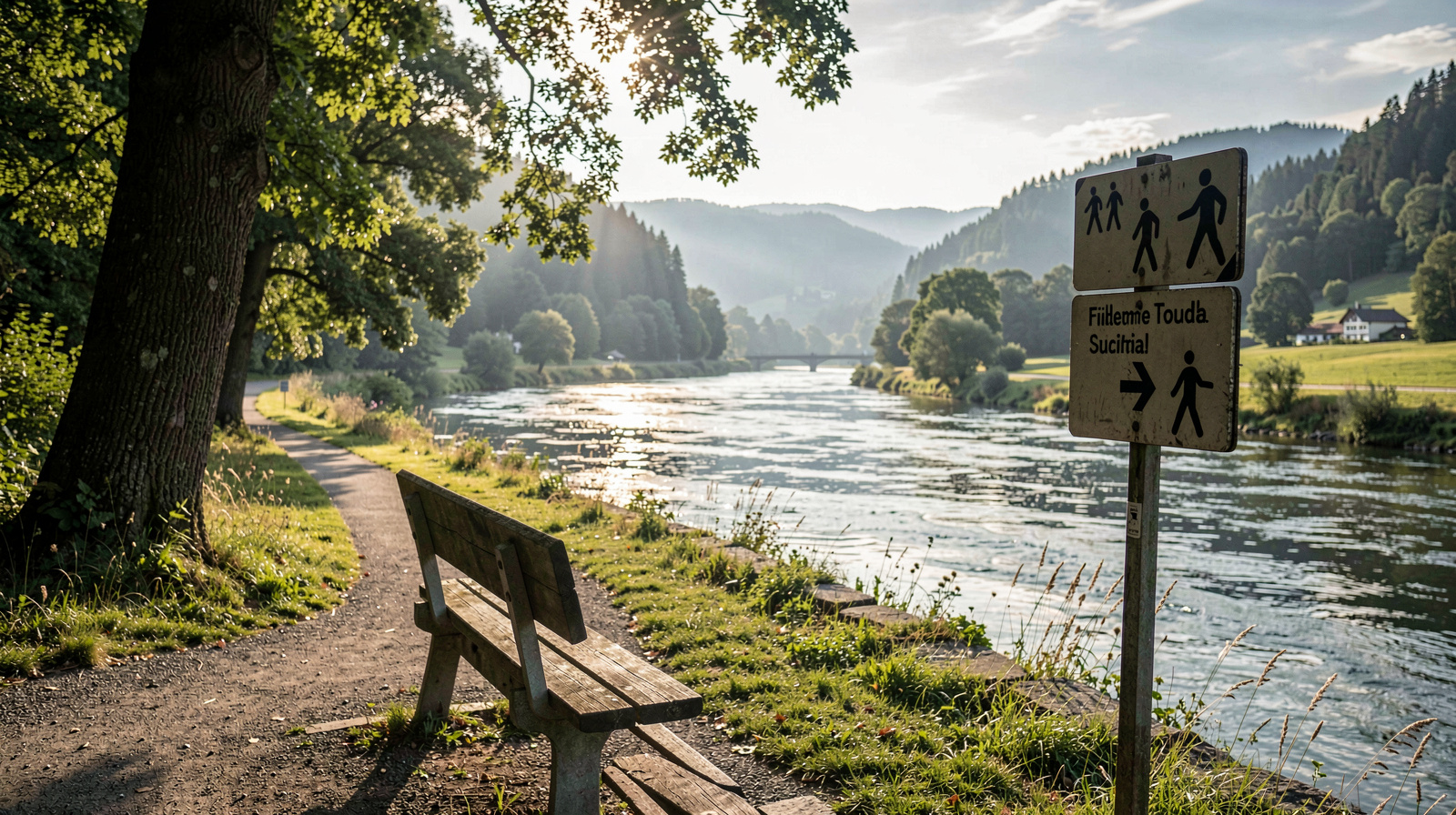
River and meadow. The Fulda and its tributaries shape the valley. Flat paths along the water suit families, cyclists and anyone who wants a walk without a climb. A morning beside the river, a picnic, and a slow return is a complete day.
Forest and low hills. The wooded slopes above the valley offer marked trails and viewpoints. These routes need proper shoes and a little planning, because the climbs are steady rather than steep.
Baroque architecture. The region around Fulda is known for its baroque buildings, including the cathedral and the former residence of the prince abbots. A town visit combines a short walk, a church interior and a cafe stop.
Rail connections. A station on the line turns a car trip into a train trip. Travellers can leave the car at home, read on the way, and avoid the search for a parking space at the destination.
How do you choose between river, forest, baroque and rail?
The choice depends on three questions. How far do you want to travel? How do you want to move? Who is coming with you?
If the group includes small children or older walkers, the river path is the safest option. The ground is even, the route is short, and there are places to sit. If the group wants exercise, the forest trails give more distance and more shade in summer. If the weather is uncertain, a baroque town centre offers churches, museums and cafes within a few streets. If nobody wants to drive, the rail line decides the destination for you.
A useful habit is to pick one theme per Sunday. Mixing a forest climb with a museum visit in the same afternoon usually ends in a rushed lunch and a tired group.
What does a town magazine add to a visitor's plan?
A regional guidebook describes the landscape. A town magazine describes the calendar. It reports on the fire brigade, the music club and the carnival society, and it notes when each one opens its doors. It also covers local business and craft, which is where a visitor finds a workshop, a farm shop or a small factory that accepts guests.
This is the practical layer of trip planning. A traveller who knows that a club holds an open afternoon can build a Sunday around it. A traveller who knows which craft business offers a tour can add a stop that no national guidebook lists.
The same structure appears in other places. A town magazine in Pennsylvania, for instance, describes how an American county organises its one big summer day around the grill, from the choice of charcoal or gas to the number of portions per person and the question of who closes the road and when. Reading that account next to a German club page shows how similar the organisational problems are, even when the food and the weather are different.
Are there specialised clubs worth knowing about?
Yes. Between the Fulda and the Rhon, many communities count a dog sports club among their main associations. These clubs keep their own training ground and their own calendar of tests and competitions. For a visitor, a dog sports club is a specific kind of local institution: it has members, rules, a site and a season.
Understanding this kind of club in detail takes more than a town magazine page. A dedicated magazine covers the training methods, the breeding rules and the competition system, in the same way a fire brigade magazine covers equipment and drills. The subject is narrow, and the reporting goes deep.
For a traveller, the value is context. A dog sports club, a music society and a carnival group all show how a small town fills its weekends. That knowledge turns a stop in a country town into something more than a fuel break.
How should a visitor plan the day?
Start with the transport. Check the rail timetable before choosing the destination, because a good connection can decide the whole plan. Then match the route to the group. Then leave space for one unplanned stop, usually a cafe or a viewpoint.
A simple schedule works well. Leave in the morning, arrive before noon, eat in the town or at the river, spend the early afternoon on the main activity, and travel back before the evening. This pattern fits a river walk, a forest trail, a baroque town centre or a club open day.
Finally, read the local sources. A town magazine, a tourist office page and a club notice board together give a realistic picture of what is open and when. That is the difference between a day that works and a day spent driving past closed gates.